News
News

Latest News

2017 Fair Housing and Social Inclusion Fellowship

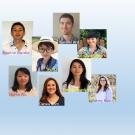
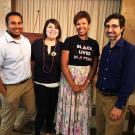
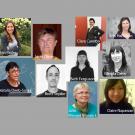
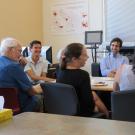
Through a unique partnership between the Center for Regional Change and the California Department of Housing and Community Development (HCD), the following fellows are participating in a fair housing training focused on social and cultural inclusion. The curriculum focuses on the application of fair housing policies through the lens of implicit bias, culture and group dynamics, and cultural intelligence.

Built Landscapes of Metropolitan Regions

Built Landscapes of Metropolitan Regions 

The “collage city” of the postmodern metropolitan region is made up of many different types of built landscapes—neighborhood-scale patterns of streets, blocks, parcels, buildings, and infrastructure—each of which have implications for livability, sustainability, and equity. This project under the guidance of Prof. Stephen M. Wheeler has developed a global typology of 27 built landscape types and has mapped those in GIS for 24 urban regions.

Using Data to Promote Fair Housing in the San Joaquin Valley

Using Data to Promote Fair Housing in the San Joaquin Valley

When the U.S. Fair Housing Act was enacted in 1968, the goal was clear: protect home buyers and renters from unjust discrimination based on race, color, religion, sex, or national origin. Yet, now, nearly 50 years later, racial and economic segregation remain entrenched at the local, regional, state, and national level.

Our Big Take-Away

Our Big Take-Away

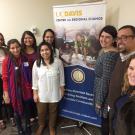
Hey, it’s Alondra Young! I am the Building Healthy Communities Youth Engagement Coordinator from Sacramento! I had the privilege of working with the awesome people at the Center for Regional Change last summer, using their Putting Youth on the Map (PYOM) website. In late June, I and other youth leaders from Sacramento hopped on the local city bus and rode up to the UC Davis Campus from Sacramento. We were able to receive an introduction to PYOM, meet CRC faculty, staff and graduate students, and receive a pretty cool campus tour!

Working for the CRC: The Ultimate Millennial Experience!

Working for the CRC: The Ultimate Millennial Experience!

Last summer, I had an incredible opportunity to work for the UC Davis Center for Regional Change (CRC) as their web designer. While most of my friends were waitressing, getting coffee for their boss, or filing paperwork all day, I was entrusted to design an entire website on my own. From brainstorming to coding to seeing the site go live – I got to be there through it all!

The CRC: Mapping Food Deserts in Placer County

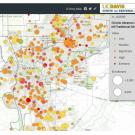
In fall of 2012, several members of the Placer Collaborative Network met regularly at the Placer Community Foundation (PCF) to brainstorm as to how best to support local food pantries. As a result of these discussions, a task force surveyed 65 local feeding organizations and compiled a report. A few important facts from the report include:

The Provost’s Forums on the Public University and the Social Good

To complement other campus efforts, the Office of the Provost established a new speaker series entitled The Provost’s Forums on the Public University and the Social Good. This series is aimed at furthering awareness and dialogue on this important topic within and beyond the university community, and also at exploring the potential to make UC Davis a center for the study of the role of the public university in contemporary society.

CRC and UC Davis Superfund Program

The Center for Regional Change is working with the UC Davis Superfund Program and community partners to learn about community concerns about agricultural use of biosolids in Kern County, CA and apply SRP-technologies and expertise to address these community driven questions.

Collaborating on a pilot project, the UC Davis Superfund Research Program (SRP) and the UC Davis Center for Regional Change (CRC) aim to:

Examining California's Vote-By-Mail Ballots

In October 2013, the California Civic Engagement Project (CCEP), in partnership with the Future of California Elections (FOCE), launched a research study examining California’s vote-by-mail ballots. This groundbreaking research is the first to provide a comprehensive analysis of the make-up of California’s unsuccessful vote-by-mail voters, as well as a wider examination of the composition of California’s 2012 vote-by-mail voters (beyond only unsuccessful voters). This research also identifies changes in the demographic composition of these voters during the last decade.

SB 375

The Center for Regional Change is providing technical assistance and capacity-building for environmental justice, health and social equity advocates in the San Joaquin Valley to enhance their impacts on the region's Sustainable Community Strategies. The CRC has developed several data tools for use by advocates, including analyses of Jobs/Housing Fit, regional opportunity and vulnerability, cumulative environmental vulnerability, and modeling of transportation and housing equity.

Art of Regional Change

The The Art of Regional Change brings together scholars, students, artists, and community groups to collaborate on media arts projects that strengthen communities, generate engaged scholarship and inform regional decision-making. Recent projects include Restore/Restory, Passion for the Land and Youth Voices for Change and Up from the Understory.

Art of Regional Change website.

Environmental Justice and Regional Change in the Central Valley

Environmental Justice and Regional Change in the Central Valley is an interdisciplinary study of the social equity impacts of regionalism in environmental governance.

We systematically examine how racial minority, low-income, and immigrant communities fare in the rescaling of decision-making about regional land use, transportation, housing, and water management.